Patent / CN210822701U
Modular Unmanned Submersible
A modular underwater vehicle with interchangeable propulsion, buoyancy and functional compartments. Detachable connections also allow multiple vehicles to form a shared platform for underwater tasks.
Abstract
English translationThis utility model discloses a modular unmanned submersible comprising a propulsion thruster, a lateral attitude thruster, a buoyancy compartment, first and second longitudinal attitude thrusters, a power core compartment, stabilising fins and a functional compartment. The power core compartment has the first and second longitudinal attitude thrusters at its two ends, with the lateral attitude thruster connected to the second longitudinal attitude thruster. Stabilising fins are installed on both sides of the power core compartment. The first longitudinal attitude thruster is connected to the buoyancy compartment, which is connected to the propulsion thruster. The housing of the power core compartment is detachably connected to the housing of the functional compartment by a mechanical latch structure. The utility model increases flexibility, improves performance and reduces cost.
Patent Drawings
4 sheets · 4 figuresPublished drawings with English labels. Select a sheet to enlarge it here.
 Enlarge
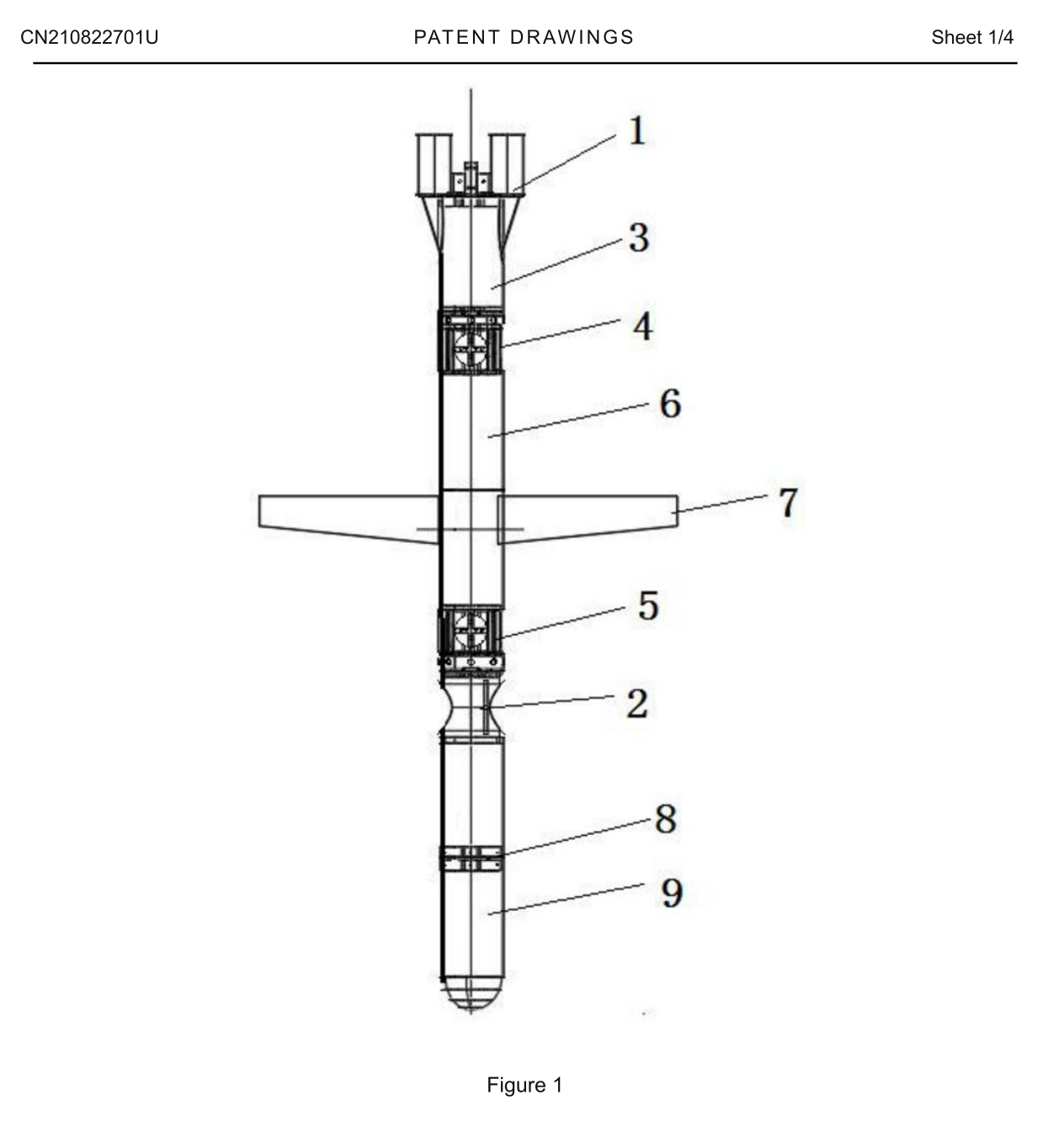
Figure 1 is a structural view of the modular unmanned submersible.
 Enlarge
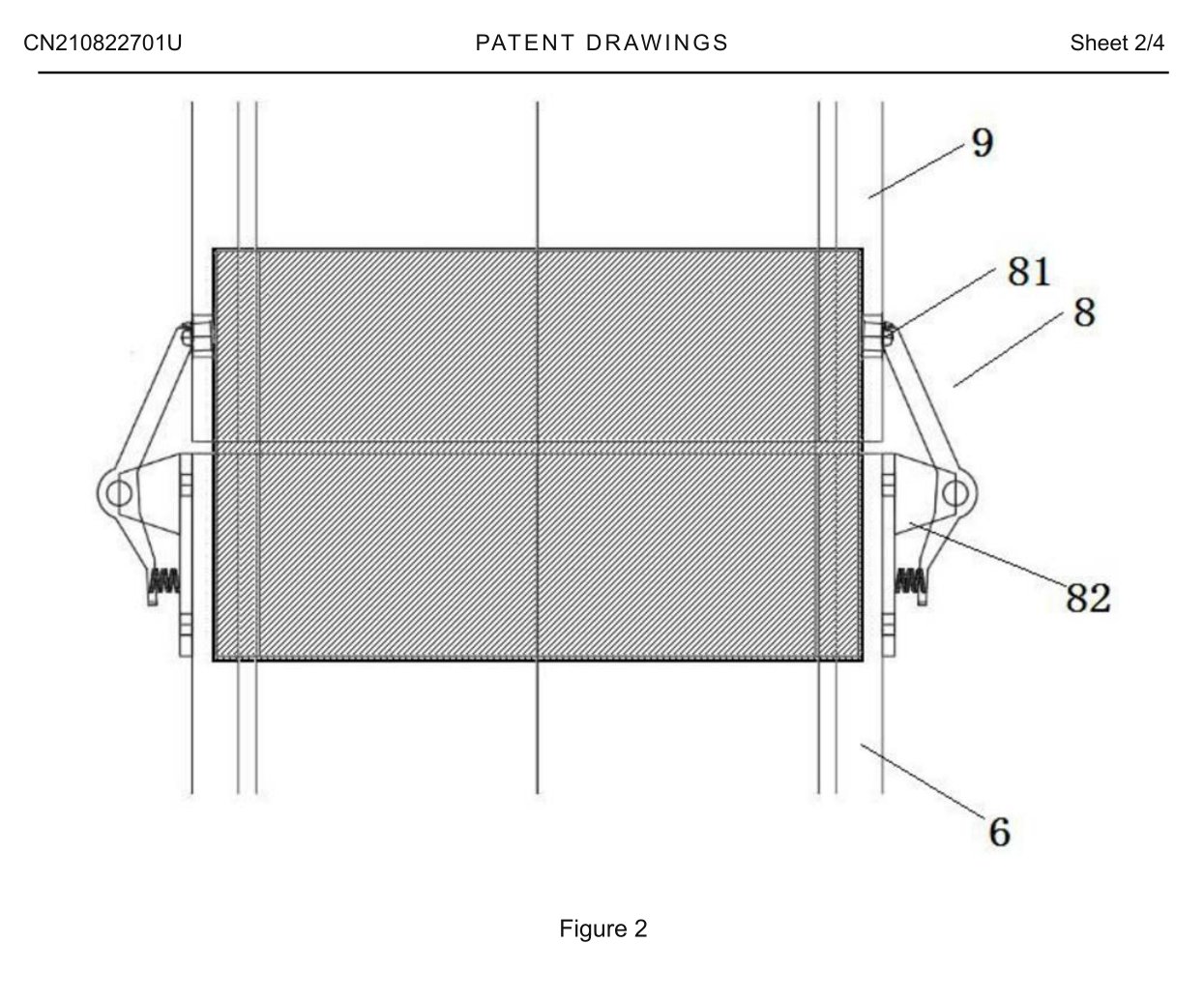
Figure 2 is a sectional view of the modular unmanned submersible.
 Enlarge
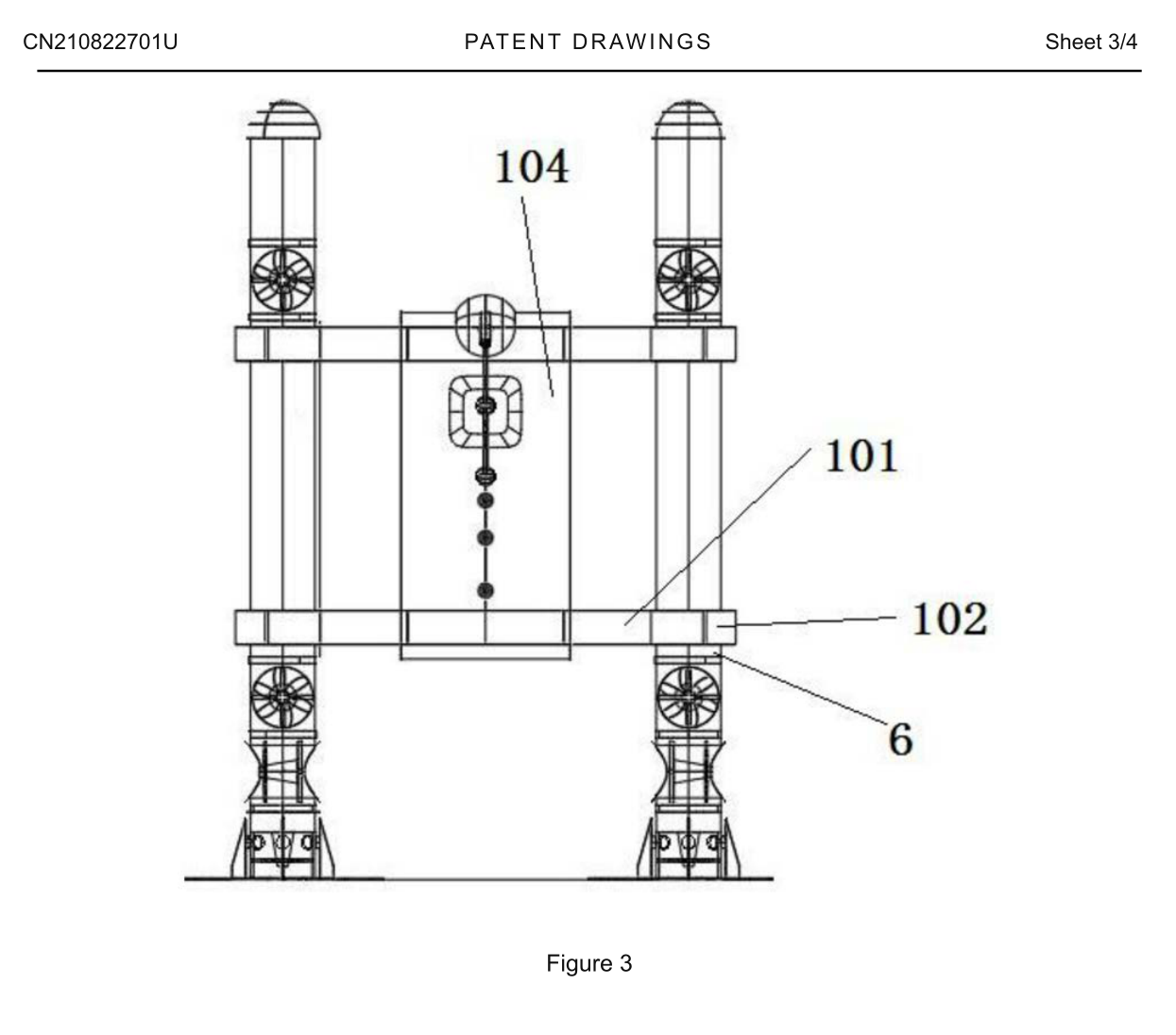
Figure 3 is a structural view of the double-ended screwdriver shaft in the modular unmanned submersible.
 Enlarge
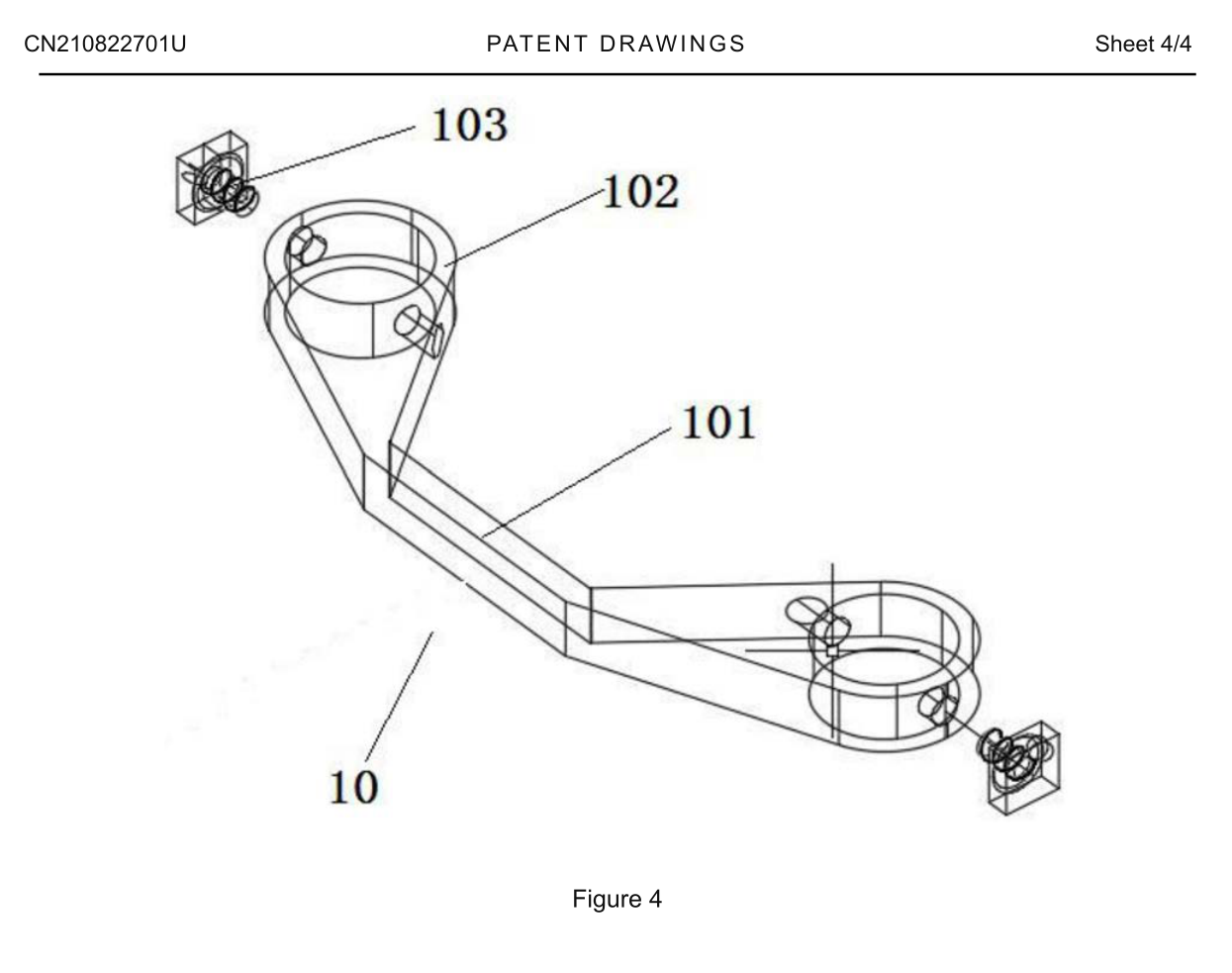
Figure 4 is a structural view of the connecting assembly in the modular unmanned submersible.
Claims
4 claims · English translation- 1. A modular unmanned submersible comprising a propulsion thruster, a lateral attitude thruster, a buoyancy compartment, first and second longitudinal attitude thrusters, a power core compartment, stabilising fins and a functional compartment, wherein the power core compartment has the first and second longitudinal attitude thrusters at its two ends and the lateral attitude thruster is connected to the second longitudinal attitude thruster; stabilising fins are installed on both sides of the power core compartment; the first longitudinal attitude thruster is connected to the buoyancy compartment; the buoyancy compartment is connected to the propulsion thruster; and the housing of the power core compartment is detachably connected to the housing of the functional compartment by a mechanical latch structure.
- 2. The modular unmanned submersible according to claim 1, wherein one end of the mechanical latch structure is inserted into the housing of the functional compartment by a fixing pin, a spring-loaded fixing-pin body at the other end is mounted on the housing of the power core compartment, and a connecting post is inserted into the housings of both compartments.
- 3. The modular unmanned submersible according to claim 1, wherein two or more modular unmanned submersibles can be joined by connecting assemblies, with two connecting assemblies installed between each pair of submersibles. Each connecting assembly comprises a trapezoidal connecting plate with submersible retaining rings at both ends. The rings are sized to match the power core compartment and are attached to it by fixing bolts. A scientific mission compartment is detachably mounted between the top ends of the two connecting assemblies.
- 4. The modular unmanned submersible according to claim 3, wherein the scientific mission compartment can accommodate underwater manipulator and detection equipment.
Description
Complete specification · English translationTechnical field
This utility model relates to submersible technology, and in particular to a modular unmanned submersible.
Background
China faces relatively constrained water resources. It has the world's largest dam and the largest number of reservoirs. Water-environment monitoring and the safety inspection of reservoirs and dams alone represent a substantial market for underwater technical services. Tourism, underwater photography, underwater exploration, search and rescue, and scientific research also create considerable demand for unmanned submersibles. However, their adoption remains far below market demand. Professional submersibles are expensive, while consumer submersibles offer limited functions and insufficient performance. Their poor adaptability, limited functionality and lack of expandability restrict wider adoption.
Technical solution
To overcome the above shortcomings of the prior art, this utility model provides a modular unmanned submersible that increases flexibility, improves performance and reduces cost.
The technical solution is a modular unmanned submersible comprising a propulsion thruster, a lateral attitude thruster, a buoyancy compartment, first and second longitudinal attitude thrusters, a power core compartment, stabilising fins and a functional compartment. The first and second longitudinal attitude thrusters are located at the two ends of the power core compartment, and the lateral attitude thruster is connected to the second longitudinal attitude thruster. Stabilising fins are installed on both sides of the power core compartment. The first longitudinal attitude thruster is connected to the buoyancy compartment, which is connected to the propulsion thruster. The housing of the power core compartment is detachably connected to the housing of the functional compartment by a mechanical latch structure.
In a preferred arrangement, one end of the mechanical latch structure is inserted into the housing of the functional compartment by a fixing pin. A spring-loaded fixing-pin body at the other end is mounted on the housing of the power core compartment. A connecting post is inserted into the housings of both compartments.
In a preferred arrangement, two or more modular unmanned submersibles can be joined by connecting assemblies, with two connecting assemblies installed between each pair. Each assembly comprises a trapezoidal connecting plate with submersible retaining rings at both ends. The rings are sized to match the power core compartment and are attached to it by fixing bolts. A scientific mission compartment is detachably mounted between the top ends of the two connecting assemblies.
In a preferred arrangement, the scientific mission compartment can accommodate detection instruments such as an underwater manipulator.
Compared with the prior art, this utility model provides the following technical effects:
1. The housing of the power core compartment is detachably connected to the housing of the functional compartment by a mechanical latch structure, allowing functional compartments to be exchanged as required. 2. Two or more modular unmanned submersibles can be combined using connecting assemblies, on which a scientific mission compartment can be detachably mounted.
Description of drawings
Figure 1 is a structural view of the modular unmanned submersible.
Figure 2 is a sectional view of the modular unmanned submersible.
Figure 3 is a structural view of the double-ended screwdriver shaft in the modular unmanned submersible.
Figure 4 is a structural view of the connecting assembly in the modular unmanned submersible.
Reference numerals: 1 — propulsion thruster; 2 — lateral attitude thruster; 3 — buoyancy compartment; 4 — first longitudinal attitude thruster; 5 — second longitudinal attitude thruster; 6 — power core compartment; 7 — stabilising fin; 8 — mechanical latch structure; 9 — functional compartment; 10 — connecting assembly; 81 — fixing pin; 82 — spring-loaded fixing-pin body; 101 — connecting plate; 102 — submersible retaining ring; 103 — fixing bolt; 104 — scientific mission compartment.
Detailed embodiments
Specific embodiments of this utility model are described below with reference to the accompanying drawings. These descriptions are intended to assist understanding and do not limit the utility model. The technical features of the embodiments described below may be combined, provided that they do not conflict with one another.
The modular unmanned submersible comprises a propulsion thruster 1, a lateral attitude thruster 2, a buoyancy compartment 3, first and second longitudinal attitude thrusters 4 and 5, a power core compartment 6, stabilising fins 7 and a functional compartment 9. Thrusters 4 and 5 are positioned at the two ends of compartment 6, and thruster 2 is connected to thruster 5. Fins 7 are installed on both sides of compartment 6. Thruster 4 is connected to compartment 3, which is connected to thruster 1. The housings of compartments 6 and 9 are detachably joined by the mechanical latch structure 8. The power core compartment 6, fins 7, buoyancy compartment 3 and propulsion thruster 1 may be connected by bolts. Thrusters 4 and 5 may also be bolted to compartment 6. Thrusters 4, 5 and 1, compartment 3 and fins 7 can therefore be replaced as required by removing their bolts.
The first and second longitudinal attitude thrusters 4 and 5 act vertically to control pitch and ascent or descent. The lateral attitude thruster 2 is arranged transversely to control horizontal movement. The propulsion thruster 1 is mounted at the rear to control forward and reverse motion.
In a preferred arrangement, one end of the mechanical latch structure 8 is inserted into the housing of the functional compartment 9 by a fixing pin 81. A spring-loaded fixing-pin body at the other end is mounted on the power core compartment 6. Pressing the spring raises pin 81 and disengages it from the housing of compartment 9, allowing rapid removal and installation of the module. A connecting post is inserted into the housings of compartments 9 and 6 to withstand transverse stress.
In a preferred arrangement, two or more modular unmanned submersibles are joined by connecting assemblies 10, with two assemblies installed between each pair. Each assembly 10 comprises a trapezoidal connecting plate 101 with submersible retaining rings 102 at both ends. The rings 102 are sized to match the power core compartment 6 and are attached to it by fixing bolts 103. A scientific mission compartment 104 is detachably mounted between the top ends of the two assemblies 10.
Two or more modular unmanned submersibles can be combined using connecting assemblies 10 to form a capable underwater robotic platform. When three, four or more submersibles are combined, each adjacent pair is joined by two connecting assemblies 10. Various medium and large underwater mission compartments and robotic arms can be mounted between the top ends of these assemblies. This supports underwater applications requiring strong propulsion, precise manoeuvring and high stability, including scientific research, exploration, salvage and safety inspections of underwater infrastructure.
In a preferred arrangement, scientific mission compartment 104 can accommodate detection instruments such as an underwater manipulator.
Compared with the prior art, this utility model provides the following technical effects:
1. The housing of the power core compartment 6 is detachably connected to the housing of the functional compartment 9 by the mechanical latch structure 8, allowing different functional compartments 9 to be exchanged as required. 2. Two or more modular unmanned submersibles can be combined using connecting assemblies 10, on which a scientific mission compartment 104 can be detachably mounted.
The foregoing describes preferred embodiments of this utility model and is not intended to limit it. Although the embodiments have been described in detail, a person skilled in the art may modify the technical solutions of these embodiments or replace some technical features with equivalent alternatives. Any modification, equivalent replacement or improvement within the spirit and principles of this utility model falls within its scope of protection.